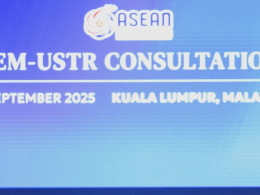



The relentless tide of Chinese goods flooding Southeast Asian markets presents a complex economic and geopolitical challenge, demanding a nuanced understanding that transcends simplistic narratives of trade and investment. While ASEAN strives to cultivate an open, resilient economic ecosystem, the reality is far more intricate, demanding strategic adaptations and a keen awareness of the shifting global power dynamics.
The Rising Tide
The surge of Chinese products into ASEAN countries is undeniable. Trade figures tell a compelling story: ASEAN has become China’s largest trading partner, with total trade reaching $770.9 billion in 2024, marking a 10.6% increase from the previous year. By the close of 2024, this figure had swelled to $823 billion. This escalating trade volume reflects China’s economic might and its strategic pivot towards Southeast Asia, but what are the underlying forces driving this shift?
Strategic Repositioning
The conventional image of Chinese enterprises merely using Southeast Asia as a transshipment hub is increasingly obsolete. Savvy Chinese companies are now actively investing in local production and distribution networks within ASEAN, a move driven by the need to add substantial value to their products and comply with stringent rules-of-origin requirements. This strategic repositioning signifies a deeper integration into the ASEAN economy, moving beyond simple re-exporting to establish a long-term presence.
Geopolitical Chessboard
The US-China trade war has undeniably accelerated these trends, casting ASEAN nations as pivotal players on a complex geopolitical chessboard. Caught between two economic titans, ASEAN countries must carefully balance their relationships, navigating the treacherous waters of competing interests and strategic alliances. This balancing act requires astute diplomacy and a clear understanding of the potential pitfalls and opportunities presented by both powers.
Challenges for ASEAN Manufacturers
The influx of subsidized Chinese imports poses a significant challenge to ASEAN manufacturers, who face increased competition in their domestic markets. Concerns about potential economic dependence on China are legitimate, requiring ASEAN to proactively manage its economic relationships and diversify its trade partners. Navigating these complex geopolitical dynamics demands a coordinated policy strategy and a commitment to regional integration.
The ASEAN-China Free Trade Area (ACFTA)
The ASEAN-China Free Trade Area (ACFTA) is a cornerstone of economic cooperation between the two regions. Ongoing upgrades to version 3.0 of the agreement aim to deepen economic ties, reduce tariffs, and address contemporary challenges such as the burgeoning digital economy. The upgraded version, slated for signing in October 2025, will introduce nine new chapters focusing on digital trade, e-commerce, innovation, and the green economy. This ambitious upgrade reflects a commitment to fostering a more inclusive and sustainable economic partnership.
The Impact of US Tariffs
US tariffs have undeniably pushed Chinese enterprises to seek alternative routes to market, initially leading some to exploit ASEAN countries as transshipment hubs. However, stricter enforcement of rules of origin and increased scrutiny from both the US and ASEAN governments are rendering this strategy increasingly untenable. The US is actively pressuring ASEAN countries to prevent the transshipment of Chinese goods, adding another layer of complexity to the region’s geopolitical calculations.
Navigating the Geopolitical Tightrope
ASEAN countries find themselves walking a tightrope, balancing the economic allure of engaging with China against the imperative of maintaining amicable relations with the US. The US-China trade war has compelled ASEAN to diversify its trade relationships and strengthen regional integration, seeking to reduce its reliance on any single economic power. Some ASEAN members, such as the Philippines, are actively strengthening ties with the US while simultaneously maintaining robust trade with China, demonstrating the region’s nuanced approach to geopolitical alignment.
Sectoral Transformations
China’s dominance in sectors such as solar energy, where Chinese companies own a significant portion of Southeast Asia’s manufacturing capacity, raises legitimate concerns about competition and the potential displacement of local firms. However, there are also burgeoning opportunities in sectors such as electric vehicles and digital manufacturing, where ASEAN countries can leverage Chinese investment and expertise to drive their own economic growth.
Economic Prospects and Potential Pitfalls
While the influx of Chinese goods has the potential to stimulate economic growth in ASEAN, it also carries inherent risks. Mismanagement, insufficient skills transfer, and limited industrial spillovers, particularly in countries heavily reliant on Chinese capital, could undermine long-term sustainable development. The International Monetary Fund (IMF) projects a potential reduction in ASEAN’s growth rate from 4.6% to 3.9% due to the ongoing trade war, underscoring the need for proactive policy interventions.
Investment Landscape
Manufacturing Foreign Direct Investment (FDI) from China into ASEAN has been steadily growing, albeit facing challenges related to tariffs and trade tensions. The Regional Comprehensive Economic Partnership (RCEP) and other free trade agreements are poised to eliminate tariffs on a wide range of traded goods, further stimulating investment flows and fostering deeper economic integration.
In conclusion, the increasing influx of Chinese goods into Southeast Asia presents a multifaceted challenge that demands careful navigation. While it offers opportunities for increased trade and investment, ASEAN economies must proactively manage the risks to ensure fair competition, promote sustainable development, and maintain balanced geopolitical relationships. The future of ASEAN hinges on its ability to harness the benefits of Chinese economic engagement while safeguarding its own economic sovereignty and strategic autonomy. The path forward requires a delicate balancing act, a commitment to regional cooperation, and a clear vision for a prosperous and resilient ASEAN.
| Key Consideration | Implication for ASEAN |
|---|---|
| Increased Trade with China | Opportunities for economic growth, but also risks of dependence. |
| Competition for Local Manufacturers | Need for innovation and efficiency to compete with subsidized Chinese goods. |
| Geopolitical Balancing Act | Navigating US-China rivalry requires strategic diplomacy. |
| ACFTA 3.0 | Potential for deeper economic integration and addressing digital economy challenges. |
| US Tariff Pressures | Need to prevent transshipment and diversify trade relationships. |
| Sectoral Development | Opportunities in EVs and digital manufacturing, but concerns over Chinese dominance in sectors like solar energy. |
| Economic Management | Careful management to ensure skills transfer and prevent industrial spillovers. |
| Investment Strategies | Leveraging RCEP and other FTAs to enhance investment flows. |
The path forward is fraught with challenges, but also brimming with potential. ASEAN’s success will depend on its ability to navigate these complexities with wisdom, foresight, and a steadfast commitment to its own economic and strategic interests. The alternative is to be swept away by the tide, losing control of its destiny in the process.
: ASEAN made up of 10 Southeast Asian countries is China s largest trading partner with the value of total trade reaching 234 billion in the China, ASEAN complete negotiations on upgraded free trade deal
: In the era of the tariff war the line between trade policy and geopolitics has grown increasingly blurred with Southeast Asia standing at the forefront of great power rivalry In bilateral negotiations the United States has exerted pressure on countries such as Vietnam Malaysia and Indonesia demanding investigations into re exported Chinese goods This is forcing ASEAN states to walk a tightrope in the contest between major powers Beijing for its part has explicitly stated that it would never accept third country agreements at the expense of China s interests Although the wording was not specific tools at the intersection of economics and politics such as reducing imports or tightening investment could all be brought into play Amid Trump Tariffs, Chinese Enterprises Reposition in Southeast Asia
: What is the version 3 0 of the China Asean free trade area CAFTA 3 0 will not only strengthen economic and trade cooperation between China and ASEAN countries but also underscore China s proactive stance in actively shaping international digital trade rules and advancing global digital economic development Chen noted According to the commerce ministry CAFTA 3 0 will introduce nine new chapters covering areas such as the digital economy the green economy and China, ASEAN fully complete negotiations on CAFTA 3.0 upgrade
: The era of transshipments via ASEAN is coming to an end forcing Chinese enterprises to adjust their strategies toward the Southeast Asian market Amid Trump Tariffs, Chinese Enterprises Reposition in Southeast Asia
: The ACFTA 3 0 protocol highlights digital trade e commerce and innovation as drivers of the next phase in cooperation China ASEAN FTA 3 0 Set for October China and ASEAN are set to upgrade their free-trade pact at the
: The latest escalation of the trade war has not created new trends out of thin air but has accelerated those already underway The post tariff landscape has forced Chinese enterprises to fundamentally reposition Southeast Asia within their global strategies The region is no longer seen merely as a convenient channel for tariff evasion but as a growing market a manufacturing base and a distribution hub This transformation is driving deeper economic integration between China and ASEAN while also introducing new complexities ranging from local economic pressures to heightened geopolitical sensitivities Amid Trump Tariffs, Chinese Enterprises Reposition in Southeast Asia
: Stricter enforcement more complex rules of origin and ASEAN countries own compliance efforts have together compelled Chinese enterprises to reconfigure their modes of operation in the region As Chinese scholar Zhao Zhongxiu warned shifting production capacity to Southeast Asia must involve adding substantial value locally in order to meet rules of origin requirements If goods are merely repackaged through Southeast Asia Zhao wrote the United States is already prepared to block such transshipment Amid Trump Tariffs, Chinese Enterprises Reposition in Southeast Asia
: We must recognise that ASEAN s fortunes are closely linked to China particularly at a time when the Chinese economy is slowing he said during the ASEAN CFO ASEAN Must Diversify As China’s Growth Slows, Says Economist
References
– China, ASEAN complete negotiations on upgraded free trade deal
– Amid Trump Tariffs, Chinese Enterprises Reposition in Southeast Asia
– China, ASEAN fully complete negotiations on CAFTA 3.0 upgrade
– Amid Trump Tariffs, Chinese Enterprises Reposition in Southeast Asia
– China and ASEAN are set to upgrade their free-trade pact at the
– Amid Trump Tariffs, Chinese Enterprises Reposition in Southeast Asia
– Amid Trump Tariffs, Chinese Enterprises Reposition in Southeast Asia
– ASEAN Must Diversify As China’s Growth Slows, Says Economist

Beli Furniture Gak Perlu Jauh-Jauh, Ada Ajeg Furniture!
Buat warga Jogja dan sekitarnya, kalo nyari furniture berkualitas, harga bersahabat, ya ke Ajeg aja. Banyak promo, bonus, dan diskon tiap minggu 💸
Dari kursi sampai lemari, semua ada — lokal pride, kualitas global.